
Researchers hope protecting donated ovarian tissue from the immune system could help pediatric cancer survivors have natural hormone cycles.
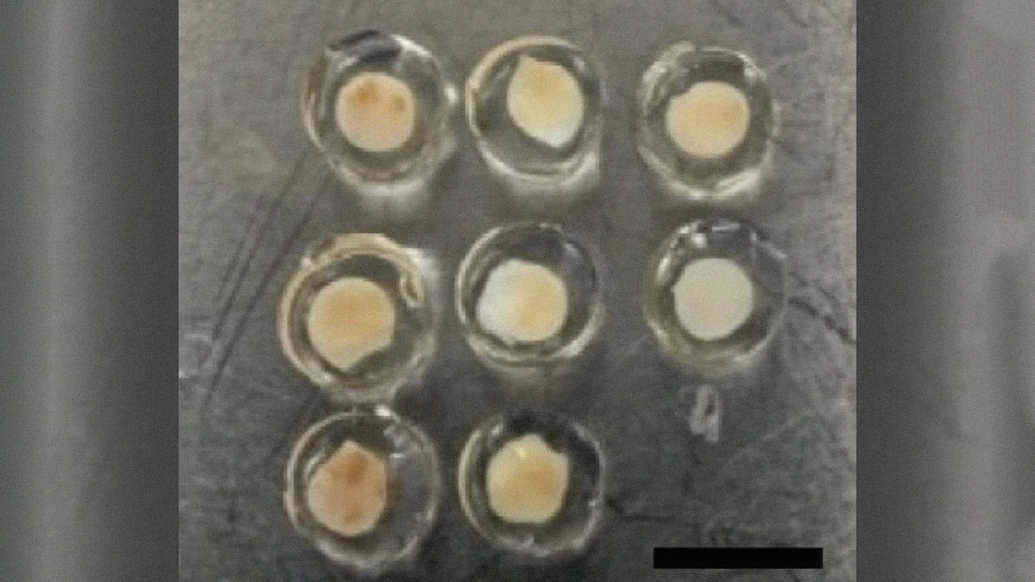
With the aim of restoring female hormone cycles for pediatric cancer survivors, a team of University of Michigan researchers has demonstrated that donated ovarian tissue, hidden from the immune system in a capsule, can produce natural hormone cycles in mice.
Though lifesaving, chemotherapy and radiation can harm the non-renewable reserve of ovarian follicles in young female cancer patients, causing a condition known as premature ovarian insufficiency.
This condition can delay or prevent puberty and lead to a series of health issues that include: bone fragility, heart problems and neurological and immune system complications.
Ovarian tissue can be harvested ahead of treatment and reimplanted afterward to restore hormone cycles, but this procedure is rare for pediatric patients and can reintroduce cancer cells in some cases.
Using donor tissue requires immune suppression, creating its own set of chronic risks.
Instead, the U-M team is pioneering a technique that encloses donated ovarian tissue in a gel capsule that blocks immune cells but allows hormones and nutrients to pass through, enabling it to be transplanted without fear of the body rejecting it.
“Currently, the only option for treating these patients is an off-label prescription of hormone replacement therapy,” said Ariella Shikanov, a U-M professor of biomedical engineering and obstetrics and gynecology and corresponding author of the study in Science Advances.
But hormone replacement therapy doesn’t replicate the natural variety and the ebb and flow of hormones from healthy ovaries—instead delivering fixed amounts of just two hormones.
The one-size-fits-all approach significantly increases risks for musculoskeletal, cardiovascular, neurological and metabolic diseases, and its long-term safety is unclear.
The U-M team tested their approach in immunodeficient mice that had their ovaries removed.
They encapsulated and implanted human ovarian tissue from deceased donors in the mice.
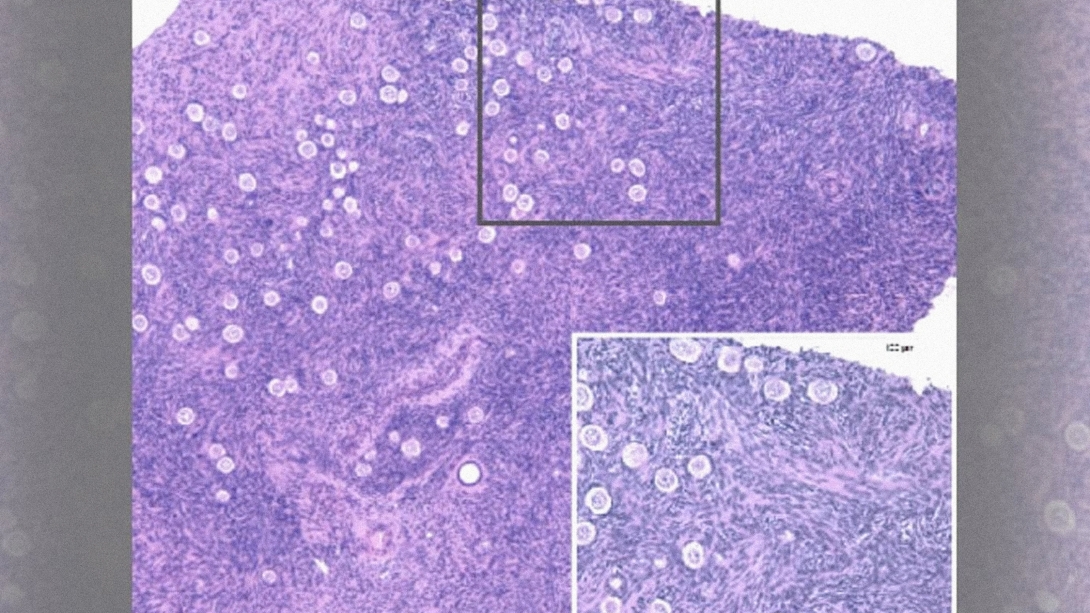
Then, over 20 weeks, they monitored the mice using hormone measurements, daily checks for estrous cycles (the mouse equivalent of menstrual cycles), and analyzed retrieved grafts.
Within 12 weeks, the mice began having regular estrous cycles.
These hormone cycles weren’t artificially induced but emerged naturally, demonstrating integration of the encapsulated ovarian tissue with the mouse’s own endocrine system.
Large follicles developed inside the capsule, producing increasing levels of estradiol (a key estrogen hormone) that reached healthy levels.
“Encapsulation and isolation of the tissue from blood supply and the immune system does not negatively affect its function,” Shikanov said.
“We could restore ovarian endocrine function and reach physiological levels of circulating hormones, specifically estradiol, and it was as good as non-encapsulated tissues, confirming that the idea of encapsulation works,” she added.
While the study was conducted in immunocompromised mice, meaning capsules didn’t have to fend off active immune systems, previous research with animal tissue suggests the capsule can protect against immune rejection.
Next steps will include testing in mice with working immune systems, assessing long-term outcomes, and exploring ways to fine-tune the process for real-world treatment.
“Overall, I think this approach with ovarian tissue could give girls and young women the opportunity to achieve physiological hormone levels long term, improving their overall wellbeing,” said Margaret Brunette, a recent Ph.D. graduate student from the Shikanov Lab and first author of the study, who is now a post doc at the National Institutes of Health.
This story was originally published by Michigan Engineering News on February 18, 2026, and re-posted by the Michigan Health Lab Blog on March 3, 2026.