How food insecurity may biologically intensify neuroblastoma growth, bridging social determinants of health and cancer biology.
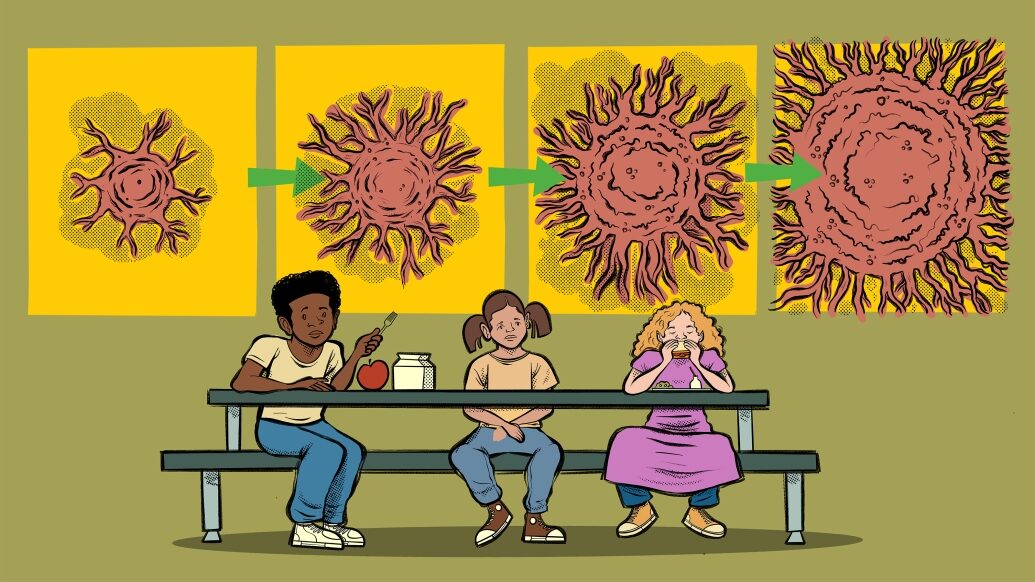
Neuroblastoma remains one of the deadliest childhood malignancies, accounting for a disproportionate number of pediatric cancer deaths worldwide.
Despite major therapeutic advances, survival rates remain lower for children from socioeconomically disadvantaged families, a pattern long observed and poorly understood at the biological level.
Extending earlier National Institute of Health’s Children’s Oncology Group findings that linked poverty to poorer survival in pediatric cancers, investigators at University of Michigan Health C.S. Mott Children’s Hospital set out to develop the first experimental model to test how social determinants might influence tumor biology itself.
The team, led by Erika Newman, M.D., Section Head of Pediatric Surgery and Associate Director for Health Equity at the Rogel Comprehensive Cancer Center, developed an innovative murine cancer model that simulated food insecurity by intermittently varying chow access, mirroring the unpredictable nutrition many families experience.
The study, recently published in Communications Biology, used established neuroblastoma validated xenograft models to observe how this stressor affected tumor growth and biologic responses.
The results were striking: the experimental group exposed to food insecurity developed significantly larger and bulkier tumors, accompanied by persistent elevation of stress hormones (corticosterone) and activation of tumor survival pathways.
“Our work builds on decades of clinical evidence linking poverty and food insecurity to poorer cancer outcomes,” said Newman.
“We set out to define the biology behind those disparities, to show how social conditions can become embedded in the body and influence how tumors grow.”
The work provides a translational framework linking social determinants of health to molecular pathways of cancer progression, paving the future for studies that explore how interventions addressing nutrition and stress might improve treatment response.
“This model gives us a scientific bridge between social context and cancer biology,” stated Newman.
“It shows that the environments our patients live in, access to food, stability, and safety are not background conditions. They are part of the biology we must confront if we want equitable outcomes.”
The research arrives at a moment of renewed concern over federal nutrition programs, with potential SNAP benefit interruptions amid government budget negotiations.
Newman emphasizes that these findings reinforce the urgency of policies ensuring consistent food access for vulnerable children and families.
Newman stresses that health care must account for the realities in which families live.
She calls for systematic screening of social determinants like food insecurity and economic strain within pediatric and oncology practices, ensuring that medical care addresses both biologic and social drivers of outcome disparities.
Additional authors: Keyonna Williams, Sahiti Chukkapalli, Biao Hu, and Olivia Tussing from the Department of Surgery, Section of Pediatric Surgery, the Rogel Cancer Center and the Center for Health Inequities in Pediatric Surgery, the Section of Pediatric Surgery from the University of Michigan Medical School, Ann Arbor, MI. Delawrence Skyes from the Department of Biology, Berry College, Mount Berry, GA. Kimber Converso-Baran from the Physiology and Phenotype Center, Frankel Cardiovascular Center, the University of Michigan Medical School, Ann Arbor, MI. Anjalika Dandamudi, Payton Thayer, Kendal Donnelly, and Samantha Kaminsky from the Department of Surgery, Section of Pediatric Surgery, the Rogel Cancer Center, the University of Michigan Medical School, Ann Arbor, MI. Benjamin Curtis from the Unit for Laboratory Animal Medicine, Pathology Core, the University of Michigan Medical School, Ann Arbor, MI. Yatrik Shah, from the Department of Molecular and Integrative Physiology, the University of Michigan Medical School, Ann Arbor, MI. Kenneth Resnicow from the Department of Pediatrics, the Rogel Cancer Center, the School of Public Health, the University of Michigan Medical School, Ann Arbor, MI.
Michigan Research Core(s): Animal Metabolic, Physiological, & Behavioral Phenotyping Core.
Paper cited: “Food insecurity impacts neuroblastoma pathogenesis in murine xenograft tumor models,” Communications Biology. DOI: 10.1038/s42003-025-08678-5.
This story was originally published by the Michigan Health Lab Blog on November 12, 2025.
Featured Animal Care & Use Program Resource:
Learn more about the ULAM Pathology Core, part of the Unit for Laboratory Animal Medicine.