
An expert answers questions about current treatments and how the new animal model resembles the disease in humans.
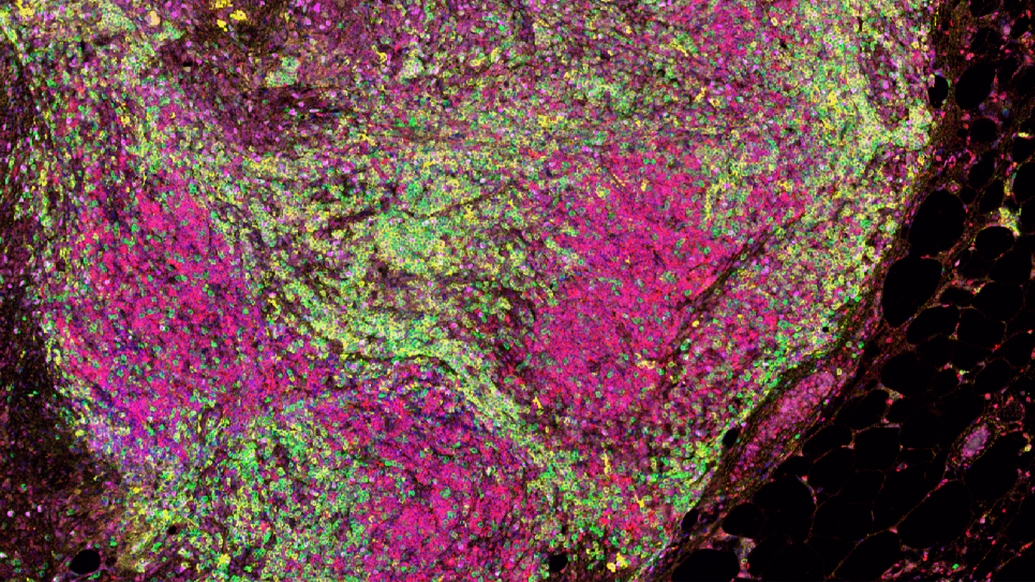
Soft tissue sarcomas typically develop in the tissues that surround and support the body’s organs. These tissues include muscles, tendons, fat, blood vessels, and nerves.
Liposarcoma is the most common type of soft tissue sarcoma, accounting for 15-20% of the diagnoses.
It develops from fat cells and affects 1 in 100,000 people in the United States each year.
There has been little progress in understanding and treating liposarcoma due to its rarity and lack of research resources.
In a new study, University of Michigan researchers have developed a novel mouse model that mirrors the disease in humans.
Christina V. Angeles, M.D., Surgical Oncologist and Associate Professor of Surgery and Dermatology, answers questions about liposarcoma, current treatments, and how the new mouse model can help researchers develop novel therapies.
What are the Different Subtypes of Liposarcoma?
Angeles: Liposarcoma symptoms depend on the tumor’s location in the body. However, the specific type of liposarcoma affects which treatments work best and the expected outcomes.
Well-differentiated liposarcoma is the most common type.
These are slow-growing tumors that are often not aggressive. However, they can recur frequently after surgical removal.
Well-differentiated liposarcoma can sometimes transform into dedifferentiated liposarcoma, which are high-grade tumors that are aggressive and grow quickly.
Both these types have the same underlying genetic abnormality—the overexpression of MDM2.
Therefore, some patients will have both subtypes in their tumor.
The other, less common subtypes have completely different genetics, including myxoid liposarcoma where the tumors are slow growing and produce a mucus-like substance and pleomorphic liposarcoma, which is the most aggressive type.
What are the Current Treatments and Survival Rates?
Angeles: Both well-differentiated and dedifferentiated liposarcoma are treated with surgery when the tumor can be removed. When located in the arms or legs, we may also use radiation.
For liposarcoma that has spread, we use doxorubicin-based chemotherapy, which is currently our most effective treatment option. However, it works in about 20% of patients.
The five-year survival for well-differentiated liposarcoma is above 90%.
However, the five-year survival for dedifferentiated liposarcoma is less than 50%, and treatment options remain limited.
Researchers have been investigating targeted therapies that inhibit MDM2, but clinical trials so far have shown poor efficacy.
How was the Mouse Model Developed?
Angeles: We wanted to create a mouse model that mimicked the high levels of MDM2 in fat cells that lead to liposarcoma.
Previous studies have shown that MDM2 inhibits p53, which is a tumor suppressor. To mimic human disease, we deleted p53 and PTEN, another tumor suppressor gene, only in fat cells.
After six months, we saw spontaneous tumors arise and these tumors closely resembled what we see in patients.
Some were well-differentiated while others were dedifferentiated.
Some tumors even had both types mixed, like what we see in human disease.
We also noticed something fascinating about the immune system’s response. Just as we see in patients, some tumors attracted many immune cells while others had very few.
For example, 20% of patients with dedifferentiated liposarcoma have lots of immune cells in their tumors, while others have very few.
We found the same phenomenon in our mice, which was interesting because the mice were all treated identically.
This tells us these differences are built into how the cancer itself behaves, which could be important for developing personalized treatments.
Why is this Model Important for Drug Development?
Angeles: We have been treating liposarcoma with the same chemotherapy since the 1960s with no real progress.
In recent years, immunotherapy, which works by helping the patient’s own immune system to fight cancer, has changed how we approach treatment of many other cancers.
Until now, we didn’t have a good way to test the effect of immunotherapies on liposarcoma before trying them in patients.
Our new mouse model will help us test how liposarcoma cells change as the disease progresses, how different treatments affect the immune cells in the tumor, and which new drug combinations might be most effective.
At the University of Michigan, we have the privilege of caring for one of the largest numbers of liposarcoma patients in the country with the help of multi-disciplinary teams that include surgeons, oncologists, pathologists, and researchers.
We’re now partnering with cancer centers throughout the country to use this preclinical mouse model to test different drugs, alone and in combination, to determine the most promising treatments for clinical trials.
Additional authors: Amanda M. Shafer, Emma Kenna, Lexi-Ann F. Golden, Ahmed M. Elhossiny, Kyle D. Perry, Jodi Wilkowski, Wei Yan, Brynn Kaczkofsky, Jake McGue, Scott C. Bresler, Adam H. Courtney, Jessie M. Dalman, Craig J. Galban, Wei Jiang, Carlos E. Espinoza, Rashmi Chugh, Matthew K. Iyer, Timothy L. Frankel, Marina Pasca di Magliano, and Andrzej A. Dlugosz.
Funding/disclosures: This work was supported by the NCI of the NIH (R03CA280126 and NCI Cancer Center Support Grant P30CA046592) and a Rogel Cancer Center Discovery Grant. Angeles is also supported in part by the National Institute of Biomedical Imaging and Bioengineering of NIH Grant R01EB034399. Golden is supported by the National Institute of General Medical Sciences of the NIH through the Training Program in Translational Research (T32GM141840).
Tech transfer(s)/Conflict(s) of interest: Perry reports personal fees from Ipsen Pharmaceutical outside the submitted work. Galban reports a patent for PRM licensed and with royalties paid from 4D Medical. R. Chugh reports grants and personal fees from Springworks Therapeutics and Inhibrx Biosciences; personal fees from Recordati Rare Diseases; and grants from Immunome, Ayala Pharmaceuticals, Astex Pharmaceuticals, Cogent Biosciences, Pfizer, PharmaMar, Polaris, GlaxoSmithKline, Kronos Bio, PTC Therapeutics, Deciphera Pharmaceuticals, Novel Nobility, and Kura Oncology outside the submitted work. T.L. Frankel reports grants from the NIH and Veterans Administration during the conduct of the study. C.V. Angeles reports grants from the NIH/NCI and NIH/National Institute of Biomedical Imaging and Bioengineering during the conduct of the study and grants from Skyline Dx outside the submitted work.
Michigan Research Core(s): Vector Core at the U-M Medical School and the U-M Advanced Genomics Core.
Paper cited: “Immunocompetent Murine Models Recapitulate the Heterogeneous Tumor-Immune Microenvironment of Human Liposarcoma,” Clinical Cancer Research. DOI: 10.1158/1078-0432.CCR-25-1628
This story was originally published by the Michigan Health Lab Blog on February 25, 2026.