
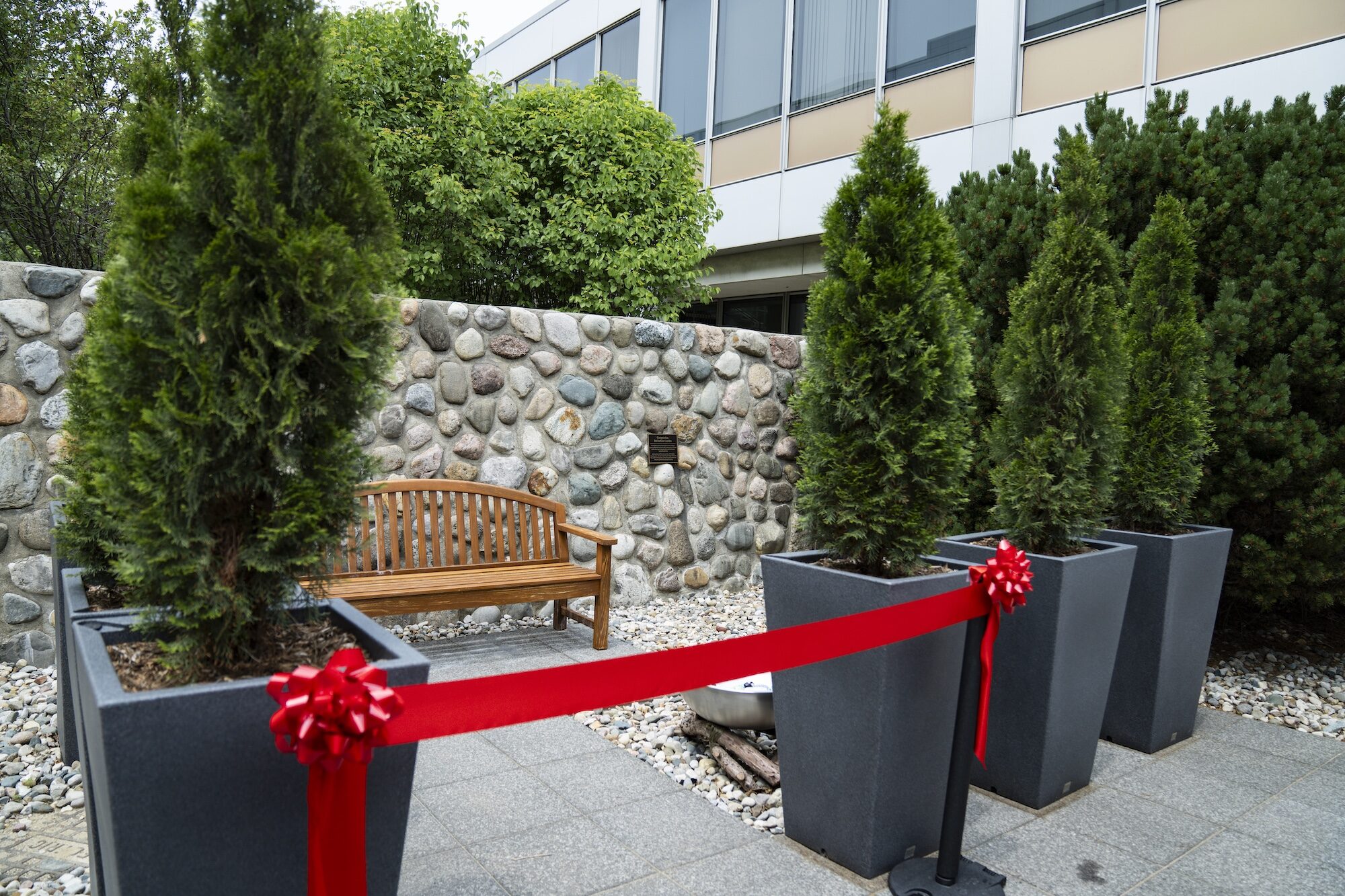
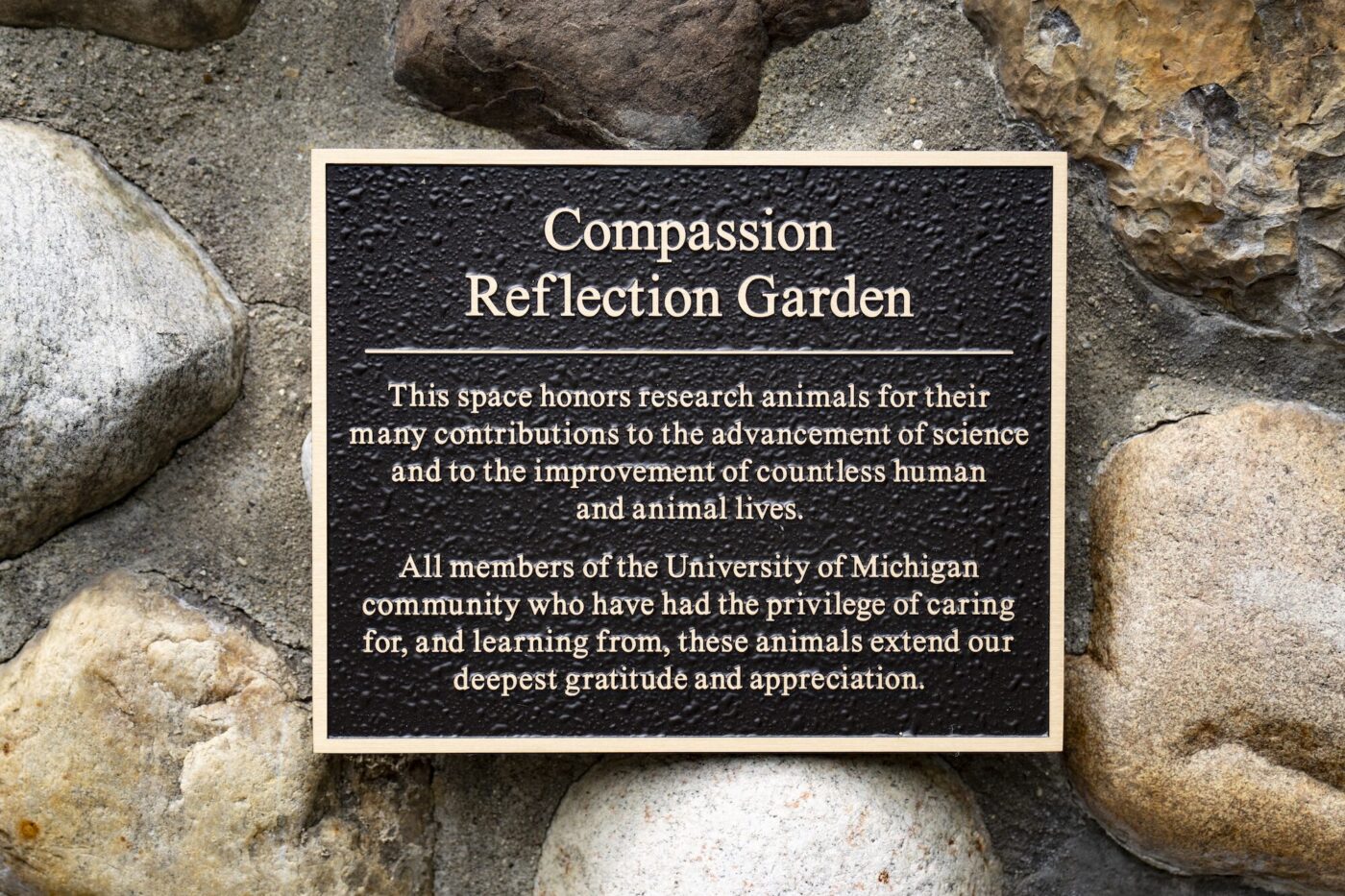
To honor the myriad ways laboratory animals have enriched and improved our lives and support the continued health and well-being of the U-M research community, the Animal Care & Use Program opened a new Compassion Reflection Garden at the North Campus Research Complex on June 13, 2025, during a formal ribbon cutting ceremony.
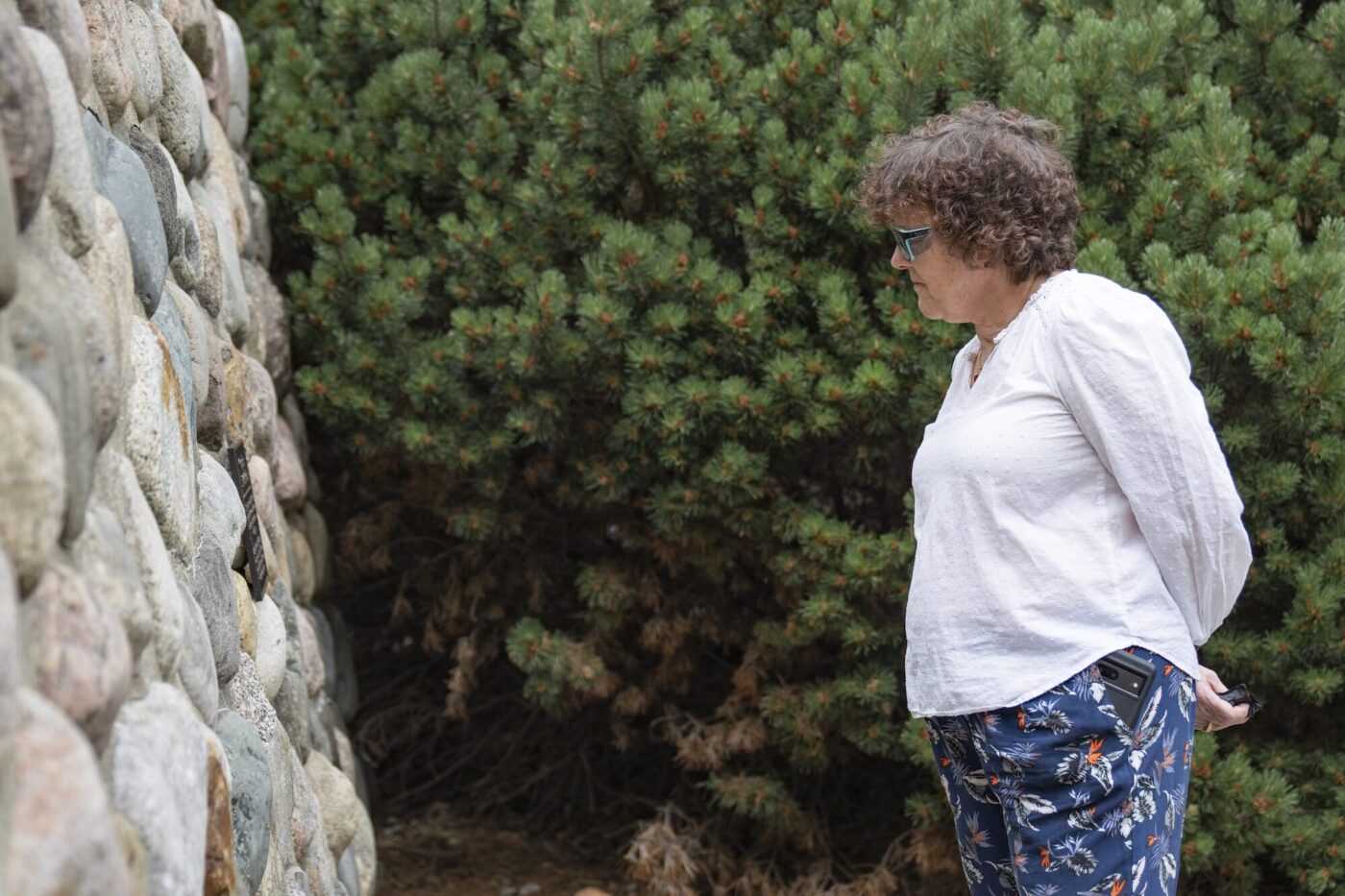
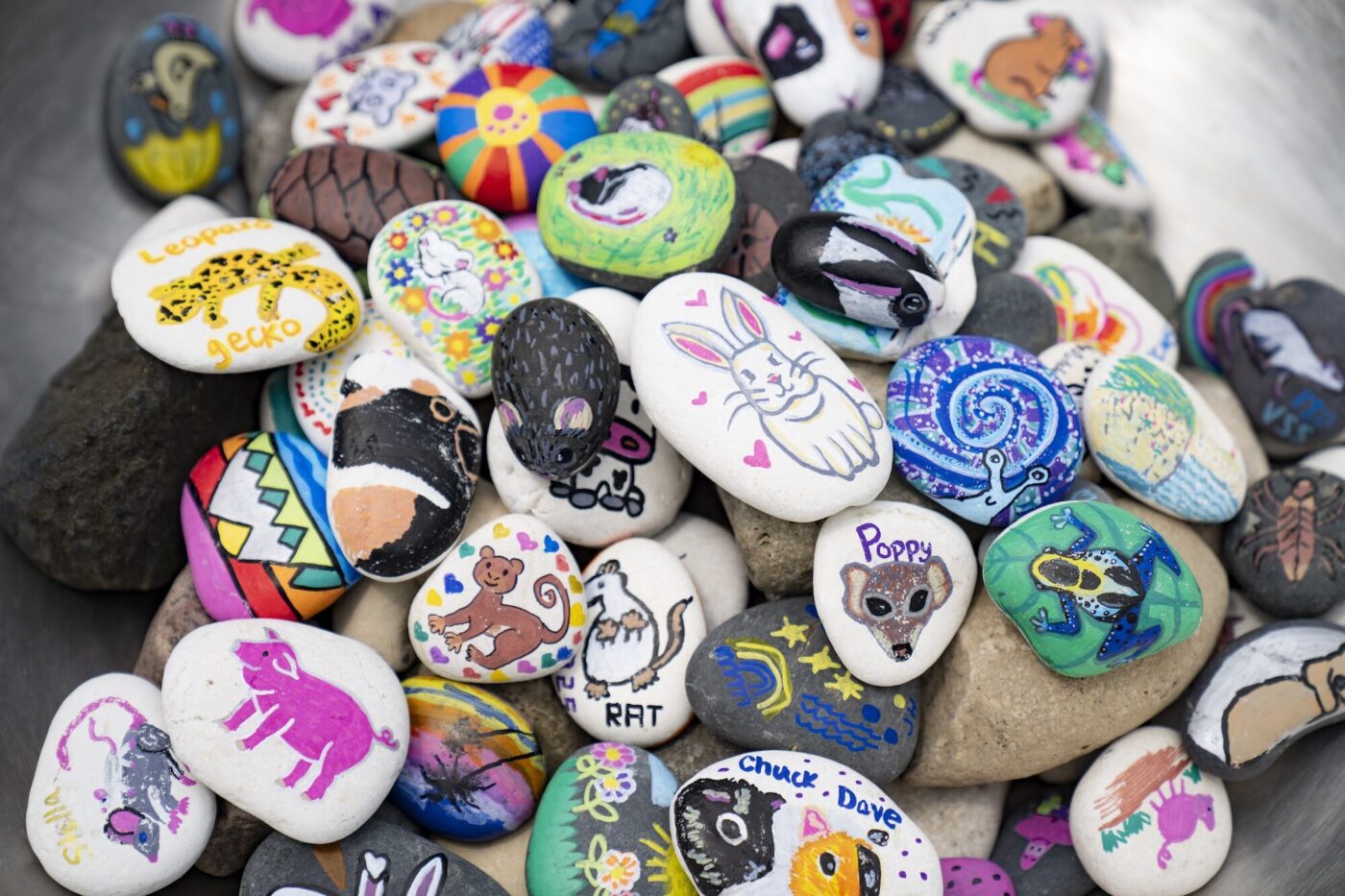
The space, which features a bench, plaque, and rock garden with painted rocks provided by U-M faculty and staff, will remain open year-round for members of the U-M community to visit at any time.
Research studies involving animals have been essential to nearly every major advancement in human and animal medicine for over 50 years. From the treatment of various diseases, joint replacement procedures, organ transplants, and countless drug discoveries, laboratory animals have made – and will continue to make – innumerable contributions to biomedical research progress at the University of Michigan and beyond.
As individuals who have dedicated their lives to improving human and animal health through rigorous scientific practice, we share a deep respect and appreciation for the animals that have been entrusted to our care. Many of us form close bonds with these animals, often serving as their daily caretakers for several years.
This same empathy and care that have compelled us to a career of service may also lead to “compassion fatigue,” a well-documented phenomenon seen in caregivers across multiple healthcare settings, including veterinary medicine and laboratory animal care.
Studies have routinely shown that institutional culture, coupled with appropriate mechanisms for expressing the feelings and emotions that accompany compassion fatigue, often lead to improved job satisfaction and retention, as well as a better professional quality of life.
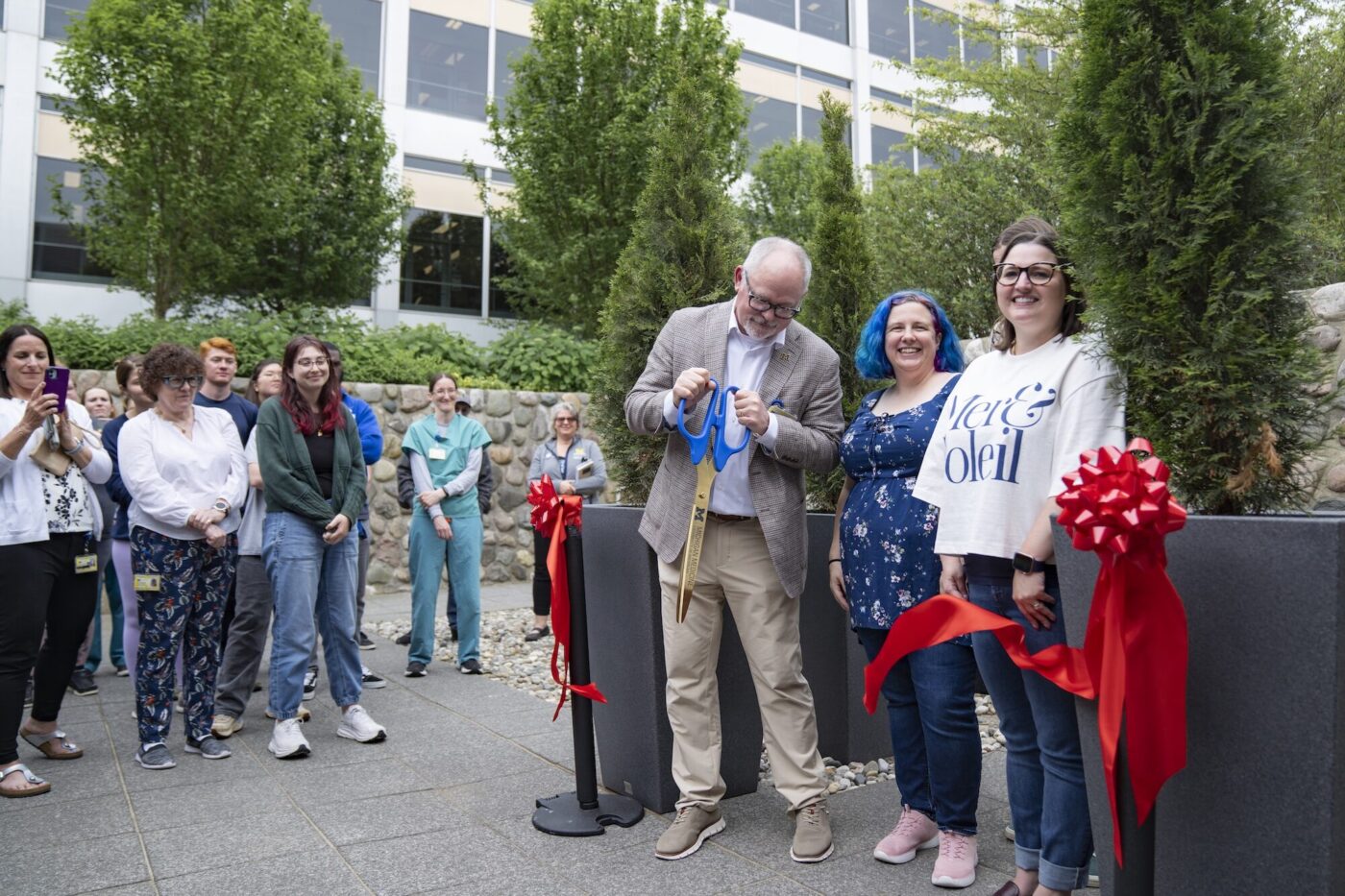
“The opening of this garden is one small but important step in building a culture of care and compassion resiliency within the U-M research community,” noted U-M Attending Veterinarian and Unit for Laboratory Animal Medicine (ULAM) Executive Director Bill King, DVM, PhD, DACLAM.
“These efforts represent years of hard work from ULAM’s Compassion Awareness Project (CAP), including former member Sarah Thurston, BS, LAT, CLABP, current CAP Coordinator Jenny Jones, BS, RLAT, and ULAM Faculty Veterinarians Tara Martin, DVM, DACLAM, and Patrick Lester, DVM, MS, DACLAM.”
Funding for the space was provided through grants from the Michigan Animal Health Foundation and the Michigan Wellness Office, with additional project support from U-M Medical School Facilities.
“Our sincere hope is that this space will serve as a quiet place for reflection and gratitude; a steady reminder that so many of the scientific discoveries we now take for granted simply would not exist without these animals or the individuals who have dedicated their lives to compassionate and humane animal care,” King said.