
To ensure scientific integrity and protect personnel, the vast majority of animals used in biomedical research are purpose-bred to be free of specific pathogens that may cause disease in humans.
Despite the multitude of systems (e.g., routine animal screening, housing in specially designed and controlled facilities, use of Personal Protective Equipment) in place to safeguard the research environment, there is always a nominal risk of zoonotic disease transmission from laboratory animals.
Although rare, infections acquired from animals can be serious and may occur even if the animal appears healthy. In close partnership with U-M’s Department of Environment, Health & Safety (EHS), the Institutional Animal Care & Use Committee (IACUC) has an established set of policies and procedures to mitigate the risk(s) of zoonotic disease exposure.
Central to these requirements is individual responsibility for proper personal hygiene, specifically appropriate hand washing and disinfection techniques IN ADDITION TO the donning of Personal Protective Equipment (PPE).
Gloves are the Starting Point
Protective gloves are required to prevent skin absorption of harmful substances; severe cuts, lacerations, punctures, or abrasions; chemical burns; and harmful temperature extremes. As such, any individual who handles animals and/or chemical, biological, or radiological materials must don gloves at all times.
Individuals with an open wound on their hands/fingers should take additional precautions by bandaging the area and wearing double gloves.
While gloves provide a good first layer of protection, U-M requirements and good laboratory practice(s) dictate that individuals also wash and/or disinfect their hands as often as necessary to maintain good hygiene after manipulating animals.
Specific Requirements for Hand Washing and Disinfection
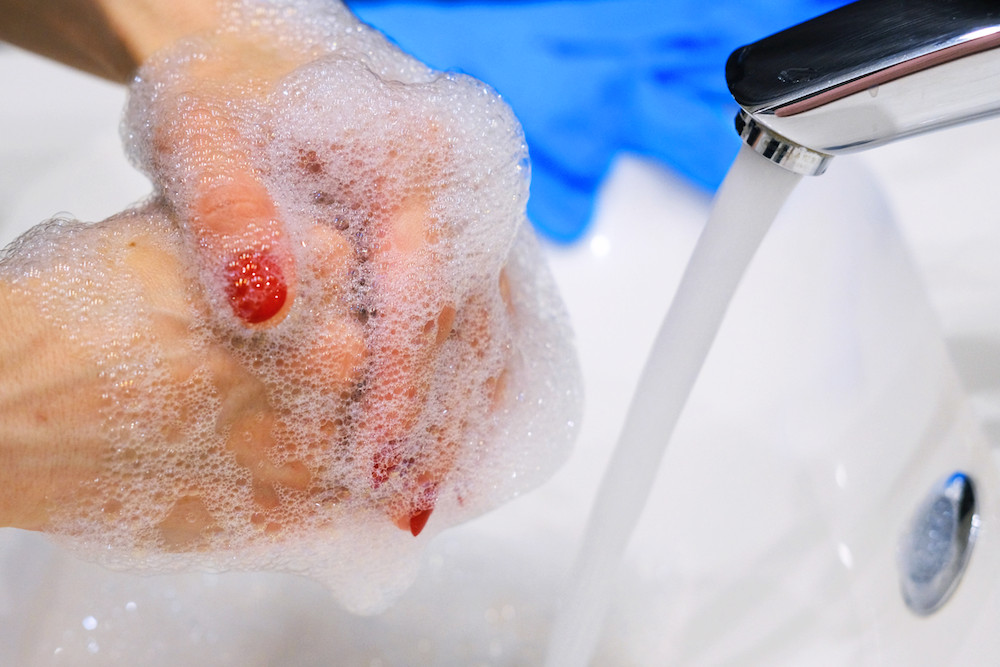
- All staff who handle animals, non-sterilized tissues, fluids, or waste must wash their hands with soap and water for approximately 40-60 seconds after removing gloves (even when double gloving).
- Hands should be washed prior to leaving an area and moving to another animal area, a general occupancy area of the facility, and/or before eating, drinking, smoking, or applying cosmetics.
- Most animal rooms contain a sink with soap and water for washing hands. If a sink is not inside the room, one will be in the near vicinity.
- Waterless alcohol sanitizer** is provided in rooms that are not equipped with a sink. **Please note: Some infectious agents are resistant to sanitizer. Therefore, you should also wash your hands with soap and water at the nearest sink within the facility.
- Specialized containment housing facilities and areas where hazardous materials are administered/used may require additional precautions.
For more information about the proper use of gloves, including how to select an appropriate glove for a specific research application, please review the Hand Protection section of U-M’s Chemical Hygiene Plan (see page 27).
Details on selecting gloves for chemical use can be found via the Glove Compatibility Chart on the EHS website.
Finally, please remember that gloves should never be worn outside of designated research spaces, regardless of visible soiling. Review the Cross-Contamination Isn’t Just for Cultures! Your Guide to Proper PPE, Glove Use article for additional reminders and precautions.

Questions?
General questions about animal use and occupational safety, including proper glove use, should be directed to EHS at [email protected] or (734) 647-1143.
Contact your ULAM Faculty Veterinarian for specific concerns about zoonotic diseases or the health/screening of your animal colony.