Facilities IACUC Policies Safety

Go Beyond the Glove: Essentials for Hand Hygiene in Animal Care Facilities

To ensure scientific integrity and protect personnel, the vast majority of animals used in biomedical research are purpose-bred to be free of specific pathogens that may cause disease in humans. Despite the multitude of systems (e.g., routine animal screening, housing in specially designed and controlled facilities, use of Personal Protective Equipment) in place to safeguard ...
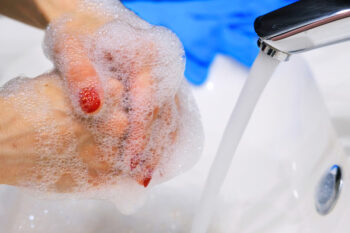
Close up of person washing hands in sink with disposable latex gloves in background

Facilities Safety SOP

Requirements & Expectations for Proper Sharps Disposal

In September 2024, Michigan state law extended the timeline for disposal of sharps containers to 18 months. With the passage of the first new 18-month disposal deadline at the end of March, we ask that all members of the U-M research community review the following institutional expectations and requirements for proper sharps disposal: Container Use ...
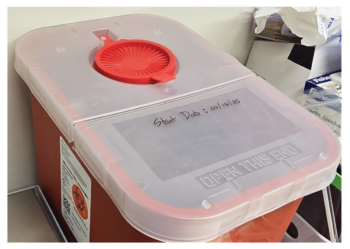
Properly labeled and maintained sharps container

Facilities Safety

Waste Anesthetic Gas (WAG): What to Know & How to Protect Yourself

All individuals who use anesthetic gases in animal-based research should understand how to reduce exposure to potentially harmful vapors – commonly referred to as “Waste Anesthetic Gas” or “WAG” – that may leak during procedures. This includes knowledge of how to employ appropriate safety precautions, engineering controls, and scavenging systems to minimize risk(s) and ensure ...

Facilities Husbandry Safety SOP ULAM

On the Move? Essentials for Safe & Secure Animal Transport

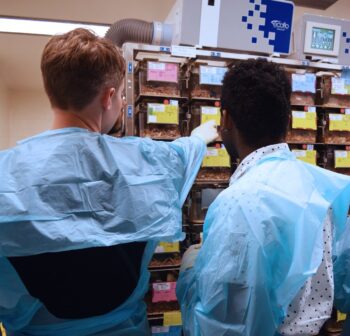
Providing a safe, secure, and properly controlled research environment is critical for maintaining animal health and minimizing variables that could impact study results.  When moving animals across campus – either from room to room, building to building, or through a common area – extra care must be taken to protect animal welfare and the integrity ...
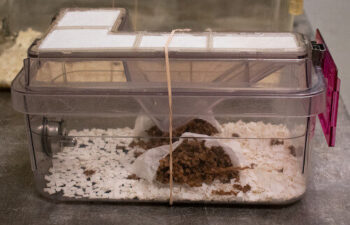
Image of mouse cage set up for proper transport

eRAM Safety

EHS Medical Surveillance Questionnaire Moving to U-M Enterprise Health Portal

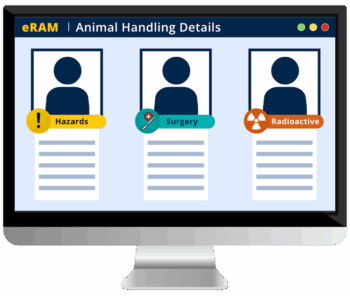
The university’s Animal Handler Occupational Health & Safety Program, co-administered by the Animal Care & Use Program and the Environment, Health & Safety (EHS) Department, not only protects personnel by ensuring safe research operations, it also plays a critical role in the U-M’s continued compliance with the federal Public Health Service Policy and accreditation by ...
Woman in medical scrubs works on laptop computer

Drugs Facilities Guidelines Husbandry IACUC Policies Safety

Lessons Learned from Fall 2025 Semi-Annual Facility Inspections

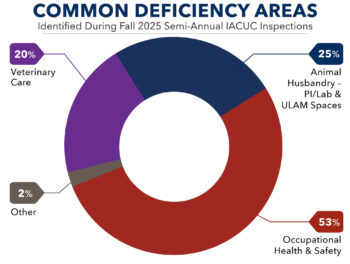
The Institutional Animal Care & Use Committee (IACUC) completed its latest round of semi-annual facility inspections in September. These routine inspections are one of the most important tools we have for assessing programmatic strengths and identifying areas for individual and collective improvement(s) in service to the animals entrusted to our care. Through this lens of ...
Multi-colored graph showing common deficiency areas identified during Fall 2025 semi-annual facility inspections

Facilities Safety

New Research Safety Continuity Policy Introduced

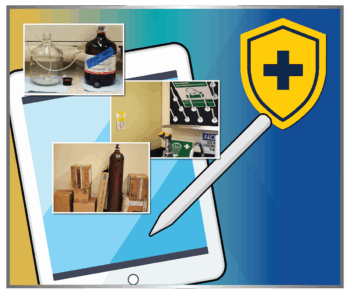
To strengthen U-M’s culture of safety and enhance shared accountability in academic and research settings, the department of Environment, Health & Safety (EHS) and the Research and Academic Safety Committee have introduced a new Research Safety Continuity Policy. The policy, applicable to all faculty Principal Investigators (PIs) who manage a research laboratory, shop, and/or studio ...
Clipboard and person icons showing continuity plan for laboratory

Facilities Safety

Hot Lab Summer: Stay Compliant, Stay Safe, Stay Cool

Proper personal attire worn in the laboratory and/or animal care facility MUST provide full coverage of the legs, feet, and torso REGARDLESS of outdoor weather conditions. As warmer summer weather approaches, please review the following reminders with your staff – including any students – who may be involved with research. Reminders for Proper Personal Attire ...
Illustration of proper personal attire that can be worn in the laboratory and animal housing facility

Facilities Safety

Cross-Contamination Isn’t Just for Cultures! Your Guide to Proper PPE, Glove Use

While the donning of appropriate safety equipment – gloves, lab coats/gowns, and safety glasses – is critical for safeguarding personnel and animal safety within the laboratory and animal care facility, NOT wearing this equipment outside of designated research spaces is just as important. Potential chemical or biological contamination may not always be visible. Removing Personal ...
Gloved hand grabbing handle with illustrated UV light showing cross-contamination