
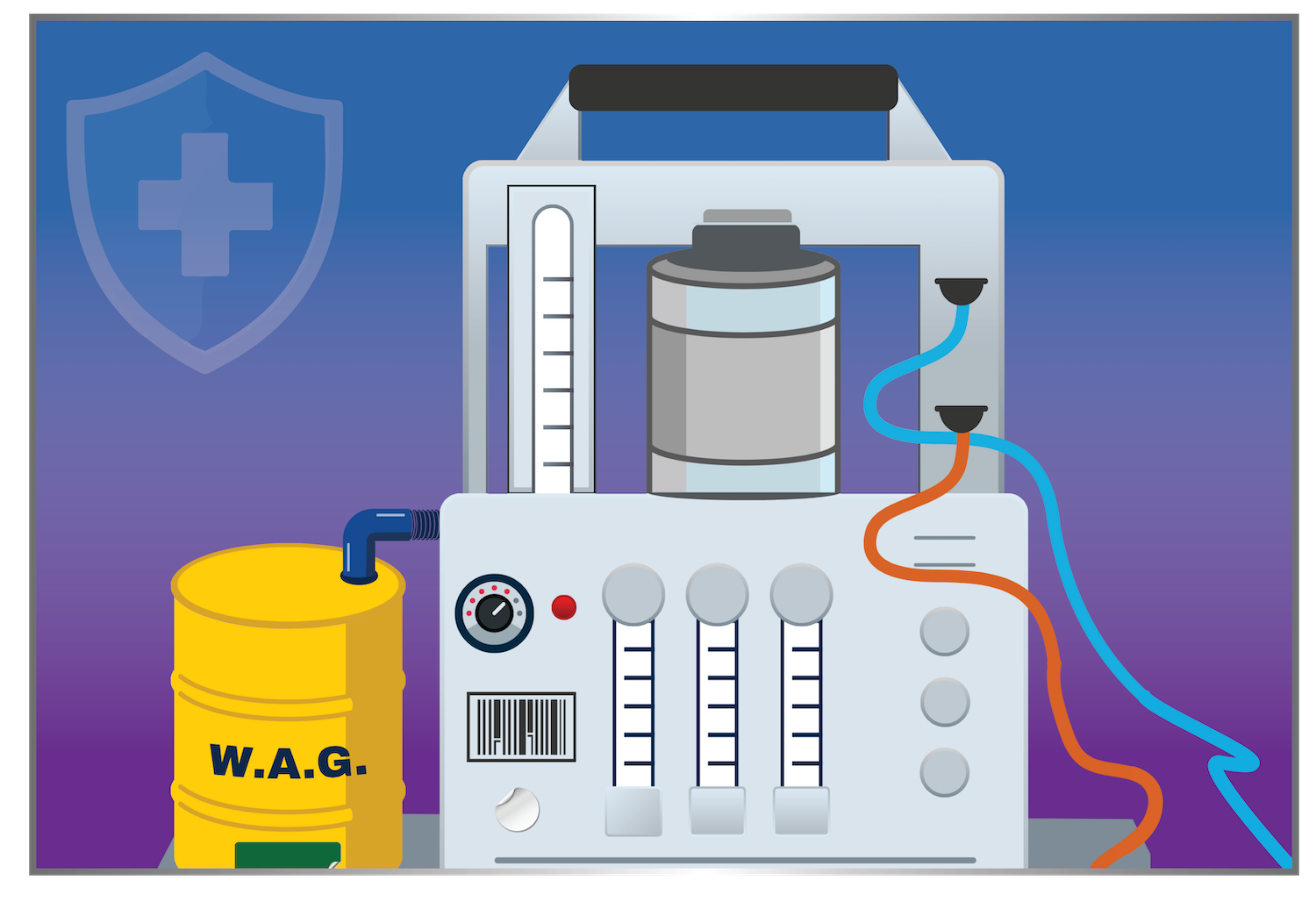
All individuals who use anesthetic gases in animal-based research should understand how to reduce exposure to potentially harmful vapors – commonly referred to as “Waste Anesthetic Gas” or “WAG” – that may leak during procedures.
This includes knowledge of how to employ appropriate safety precautions, engineering controls, and scavenging systems to minimize risk(s) and ensure personnel safety.
Safety Precautions & Engineering Controls
The use of animal anesthetic gases (e.g., isoflurane, halothane, enflurane, ether, and nitrous oxide) must be performed in an area with good ventilation and controls to capture (i.e., scavenge) and exhaust WAG.
Unless prior approval is obtained from U-M’s Department of Environment, Health & Safety (EHS), anesthetic gases should only be used with an approved gas scavenging system OR if the agent is used inside a certified fume hood.
Scavenging Systems
There are two types of scavenging systems for managing WAG: active and passive.
Active scavenging
Passive scavenging**
Use Case
- This is the preferred method for managing WAG
- Required when using the “open-drop jar” method
- May be appropriate in situations where space is limited or there are other constraints
- Requires additional considerations and maintenance requirements (see details below)
How it Works
- Uses suction to draw WAG away from the individual via a fume hood or snorkel exhaust system
- Directs the animal’s exhaled air through non-mechanically assisted means to an activated charcoal filter (e.g., F/Air canister)
**If passive scavenging is used, proper placement and maintenance of charcoal canisters is necessary to protect personnel. This includes:
- Positioning canisters upright AND below the level of the anesthetic gas vaporizer machine
- Not blocking exhaust ports
- Following all manufacturer-provided instructions for use (e.g., weight and/or time limits)
- Maintaining a record of the date and weight or hours used on the side of the canister for each use
- Disposing of all canisters through the EHS Hazardous Materials Management (HMM) Program
Exposure Risks & Reporting Concerns
Individuals who have been acutely exposed to excessive amounts of anesthetic gas may experience drowsiness, headache, nausea, poor judgment, and loss of coordination. Chronic symptoms of over-exposure can include liver, kidney, and reproductive effects.
Any individual who is concerned about potential exposure to WAG should contact EHS ([email protected]) for an evaluation.
Additional Resources
Please take a moment to review the following resources regarding proper use of anesthetic gases in animal research:
- Anesthetic Gases in Animal Research (note: clicking on the link will download a Word document copy of the SOP)
- Laboratory Hoods – Types and When to Use (newsletter article)
- Safe Use of Isoflurane in Animal Research (PDF download)
If you have any additional questions or concerns, please contact EHS at [email protected].
Thank you for doing your part to ensure that safety remains a top priority throughout your daily research operations and in your responsible care and use of animals.