Announcements

Husbandry SOP ULAM

SOP Modified to Clarify When Wet Rodent Cages are Changed

The Unit for Laboratory Animal Medicine (ULAM) recently updated the Standard Operating Procedure (SOP) for Laboratory Assumption of the Feeding, Watering and/or Cage Changing of Rodents to provide additional clarification on when ULAM husbandry personnel will change rodent cages that are found to be wet/flooded. This update does NOT require any action from laboratories who ...
Wet cage change icon

April 15-16: Virtual Anesthesia and Analgesia Symposium

Hosted by the University of Michigan’s Unit for Laboratory Animal Medicine (ULAM), the University of Pennsylvania, and Stanford University, the Anesthesia and Analgesia Symposium is a two-day virtual event dedicated to sharing expertise and exploring improved standards of care around rodent and small animal anesthesia and analgesic regimens. The Symposium will take place on Wednesday, April ...
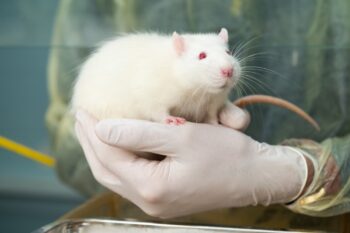
white rat held in gloved hand

Drugs Guidelines Policies

Drug Labeling Simplified: New Printable Template & Essential Reminders

The proper storage and use of drugs and other medical materials in animal-based research – including clear and appropriate labeling of all substances – is essential for ensuring animal welfare, maintaining programmatic compliance, and protecting scientific rigor. To assist laboratories with this simple but important task, our Program has developed a standard labeling template that ...
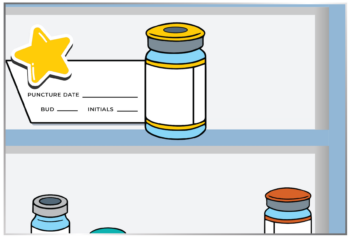
Medicine vial icons with Beyond Use Date label

AAALAC eRAM QA

Protocol Spring Cleaning: Benefits & Best Practices

Email communications from the Animal Care & Use Program are largely informed by an individual’s assigned role on an active animal use protocol. Most emails are auto generated by the software systems (e.g., eRAM, Cornerstone Learning, Enterprise Health) that our Program relies upon to maintain regulatory compliance, manage multi-faceted research projects, and track training required ...

Facilities Safety

Waste Anesthetic Gas (WAG): What to Know & How to Protect Yourself

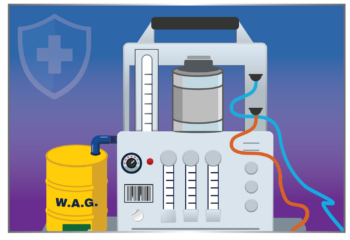
All individuals who use anesthetic gases in animal-based research should understand how to reduce exposure to potentially harmful vapors – commonly referred to as “Waste Anesthetic Gas” or “WAG” – that may leak during procedures. This includes knowledge of how to employ appropriate safety precautions, engineering controls, and scavenging systems to minimize risk(s) and ensure ...

AAALAC

Monday, March 23: AAALAC 2026 Site Visit Community Kickoff Events

The University of Michigan’s next re-accreditation visit by AAALAC, International (AAALAC) will take place this Summer (i.e., June – August 2026). AAALAC accreditation is critical to both the success of our Animal Care & Use Program and to the larger U-M research enterprise. Full continued accreditation demonstrates to our peers, funding agencies, and the general ...
AAALAC International logo with 2026 Site Visit text underneath

Facilities IACUC

Winter 2026 Semi-Annual IACUC Facility Inspections Start Monday, March 9

The Institutional Animal Care & Use Committee (IACUC) will begin its next round of semi-annual facility inspections on Monday, March 9, 2026. Inspections will run through Thursday, March 12, 2026, and include any animal rooms, surgical suite support spaces, or areas where procedures are conducted with animals. Winter 2026 Facility Inspection Schedule View the complete ...
Facility inspection checklist reminder icon for Winter 2026 inspections

Training

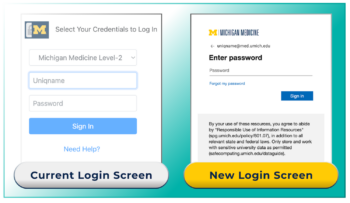
Effective Wednesday, February 18: Change to Cornerstone Learning Login

The login process for Cornerstone Learning– the learning management system for all animal care and use training classes required by the Institutional Animal Care & Use Committee – will be changing effective Wednesday, February 18. These changes do NOT require you to take any action. However, in the interest of transparency we wanted to share ...
Side by side screenshots of current and new Cornerstone Learning login pages

Facilities Husbandry Safety SOP ULAM

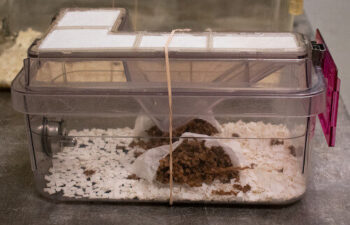
On the Move? Essentials for Safe & Secure Animal Transport

Providing a safe, secure, and properly controlled research environment is critical for maintaining animal health and minimizing variables that could impact study results.  When moving animals across campus – either from room to room, building to building, or through a common area – extra care must be taken to protect animal welfare and the integrity ...
Image of mouse cage set up for proper transport

Federal Regulations & Standards IACUC

Guidance & Best Practices for Performing Literature Searches

The U-M’s Institutional Animal Care & Use Committee (IACUC) requires that all Principal Investigators (PIs)/Study Teams provide detailed justification(s) for the use of any vertebrate animal or cephalopod in research or instruction. In addition to fulfilling its regulatory obligation(s), outlined in greater detail in the federal Animal Welfare Act & Animal Welfare Regulations (AWA/AWR), the ...
Computer with screenshot of USDA AWIC Literature Searching webpage and gold 3Rs logo

Husbandry ULAM

ULAM Per-Diem Rates Extended Through Early 2026

Our Unit for Laboratory Animal Medicine (ULAM) works in close partnership with the U-M’s Enterprise Financial Planning & Analysis Office (EFP&A) to routinely assess per-diem rates for animal care. Rates are evaluated on an individual, case-by-case basis at least annually to allow for direct cost recovery (i.e., billing for the personnel and supply charges associated ...
Two people sitting at a desk reviewing a budget spreadsheet on the computer